
分析Java中FutureTask异步任务计算的源码
来源:亿速云
时间:2024-03-29 09:36:31 426浏览 收藏
你在学习文章相关的知识吗?本文《分析Java中FutureTask异步任务计算的源码》,主要介绍的内容就涉及到,如果你想提升自己的开发能力,就不要错过这篇文章,大家要知道编程理论基础和实战操作都是不可或缺的哦!
了解一下什么是FutureTask?
FutureTask 是一个可取消的异步计算。
FutureTask提供了对Future的基本实现,可以调用方法去开始和取消一个计算,可以查询计算是否完成,并且获取计算结果。
FutureTask只能在计算完成后获取到计算结果,一旦计算完成,将不能重启或者取消,除非调用runAndReset方法。
FutureTask除了实现了Future接口以外,还实现了Runnable接口,因此FutureTask是可以交由线程池的Executor执行,也可以直接使用一个异步线程调用执行(futureTask.run())。
FutureTask 是如何实现的呢?
首先,我们看一下FutureTask类的继承结构,如下图,它实现的是RunnableFuture接口,而RunnableFuture继承自Future和函数式接口Runnable,所以说FutureTask本质就是一个可运行的Future。
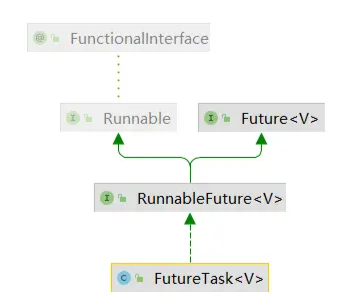
Future 接口约定了一些异步计算类必须要实现的功能,源码如下:
package java.util.concurrent; public interface Future{ /** * 尝试取消任务的执行,并返回取消结果。 * 参数mayInterruptIfRunning:是否中断线程。 */ boolean cancel(boolean mayInterruptIfRunning); /** * 判断任务是否被取消(正常结束之前被被取消返回true) */ boolean isCancelled(); /** * 判断当前任务是否执行完毕,包括正常执行完毕、执行异常或者任务取消。 */ boolean isDone(); /** * 获取任务执行结果,任务结束之前会阻塞。 */ V get() throws InterruptedException, ExecutionException; /** * 在指定时间内尝试获取执行结果。若超时则抛出超时异常TimeoutException */ V get(long timeout, TimeUnit unit) throws InterruptedException, ExecutionException, TimeoutException; }
Runnable 接口我们都很熟悉,他就是一个函数式接口,我们常用其创建一个线程。
package java.lang;
?
@FunctionalInterface
public interface Runnable {
 ? ?
 ? ?public abstract void run();
}
FutureTask就是一个将要被执行的任务,它包含了以上接口具体的实现,FutureTask内部定义了任务的状态state和一些状态的常量,它的内部核心是一个Callable callable,我们通过构造函数可以传入callable或者是runnable,最后都会内部转为callable,因为我们需要获取异步任务的执行结果,只有通过Callable创建的线程才会返回结果。
我们可以通过此时的状态判断Future中isCancelled(),isDone()的返回结果。
以下为FutureTask源码,内含核心源码分析注释
package java.util.concurrent; import java.util.concurrent.locks.LockSupport; public class FutureTaskimplements RunnableFuture { /** * 任务的运行状态 */ private volatile int state; private static final int NEW = 0; // 新建 private static final int COMPLETING = 1; // 完成 private static final int NORMAL = 2; // 正常 private static final int EXCEPTIONAL = 3; // 异常 private static final int CANCELLED = 4; // 取消 private static final int INTERRUPTING = 5; // 中断中 private static final int INTERRUPTED = 6; // 中断的 private Callable callable; /** * 返回结果 */ private Object outcome; private volatile Thread runner; private volatile WaitNode waiters; ... public FutureTask(Callable callable) { if (callable == null) throw new NullPointerException(); this.callable = callable; this.state = NEW; } public FutureTask(Runnable runnable, V result) { this.callable = Executors.callable(runnable, result); this.state = NEW; } public boolean isCancelled() { return state >= CANCELLED; } public boolean isDone() { return state != NEW; } /* * 取消任务实现 * 如果任务还没有启动就调用了cancel(true),任务将永远不会被执行。 * 如果任务已经启动,参数mayInterruptIfRunning将决定任务是否应该中断执行该任务的线程,以尝试中断该任务。 * 如果任务任务已经取消、已经完成或者其他原因不能取消,尝试将失败。 */ public boolean cancel(boolean mayInterruptIfRunning) { if (!(state == NEW && UNSAFE.compareAndSwapInt(this, stateOffset, NEW, mayInterruptIfRunning ? INTERRUPTING : CANCELLED))) return false; try { // in case call to interrupt throws exception if (mayInterruptIfRunning) { try { Thread t = runner; if (t != null) t.interrupt(); } finally { // final state UNSAFE.putOrderedInt(this, stateOffset, INTERRUPTED); } } } finally { finishCompletion(); } return true; } /* * 等待获取结果 * 获取当前状态,判断是否执行完成。并且判断时间是否超时 * 如果任务没有执行完成,就阻塞等待完成,若超时抛出超时等待异常。 */ public V get() throws InterruptedException, ExecutionException { int s = state; if (s <= COMPLETING) s = awaitDone(false, 0L); return report(s); } /* * 等待获取结果 * 获取当前状态,判断是否执行完成。 * 如果任务没有执行完成,就阻塞等待完成。 */ public V get(long timeout, TimeUnit unit) throws InterruptedException, ExecutionException, TimeoutException { if (unit == null) throw new NullPointerException(); int s = state; if (s <= COMPLETING && (s = awaitDone(true, unit.toNanos(timeout))) <= COMPLETING) throw new TimeoutException(); return report(s); } /** * 根据状态判断返回结果还是异常 */ private V report(int s) throws ExecutionException { Object x = outcome; if (s == NORMAL) return (V)x; if (s >= CANCELLED) throw new CancellationException(); throw new ExecutionException((Throwable)x); } protected void done() { } /** * 设置结果借助CAS确认状态是否完成状态 */ protected void set(V v) { if (UNSAFE.compareAndSwapInt(this, stateOffset, NEW, COMPLETING)) { outcome = v; UNSAFE.putOrderedInt(this, stateOffset, NORMAL); // final state finishCompletion(); } } /** * 设置异常,当运行完成出现异常,设置异常状态 */ protected void setException(Throwable t) { if (UNSAFE.compareAndSwapInt(this, stateOffset, NEW, COMPLETING)) { outcome = t; UNSAFE.putOrderedInt(this, stateOffset, EXCEPTIONAL); // final state finishCompletion(); } } /* * 执行callable获取结果,或者异常 * 判断状态是不是启动过的,如果是新建才可以执行run方法 */ public void run() { if (state != NEW || !UNSAFE.compareAndSwapObject(this, runnerOffset, null, Thread.currentThread())) return; try { Callable c = callable; if (c != null && state == NEW) { V result; boolean ran; try { result = c.call(); ran = true; } catch (Throwable ex) { result = null; ran = false; setException(ex); } if (ran) set(result); } } finally { runner = null; int s = state; if (s >= INTERRUPTING) handlePossibleCancellationInterrupt(s); } } /** * 重新执行 */ protected boolean runAndReset() { if (state != NEW || !UNSAFE.compareAndSwapObject(this, runnerOffset, null, Thread.currentThread())) return false; boolean ran = false; int s = state; try { Callable c = callable; if (c != null && s == NEW) { try { c.call(); // don't set result ran = true; } catch (Throwable ex) { setException(ex); } } } finally { runner = null; s = state; if (s >= INTERRUPTING) handlePossibleCancellationInterrupt(s); } return ran && s == NEW; } /* * 处理可能取消的中断 */ private void handlePossibleCancellationInterrupt(int s) { if (s == INTERRUPTING) while (state == INTERRUPTING) Thread.yield(); } static final class WaitNode { volatile Thread thread; volatile WaitNode next; WaitNode() { thread = Thread.currentThread(); } } /** * 移除并唤醒所有等待线程,执行done,置空callable */ private void finishCompletion() { // assert state > COMPLETING; for (WaitNode q; (q = waiters) != null;) { if (UNSAFE.compareAndSwapObject(this, waitersOffset, q, null)) { for (;;) { Thread t = q.thread; if (t != null) { q.thread = null; LockSupport.unpark(t); } WaitNode next = q.next; if (next == null) break; q.next = null; // unlink to help gc q = next; } break; } } done(); callable = null; // to reduce footprint } /** * 等待完成 * 首先判断是否超时 * 处理中断的,然后处理异常状态的,处理完成的... */ private int awaitDone(boolean timed, long nanos) throws InterruptedException { final long deadline = timed ? System.nanoTime() + nanos : 0L; WaitNode q = null; boolean queued = false; for (;;) { if (Thread.interrupted()) { removeWaiter(q); throw new InterruptedException(); } int s = state; if (s > COMPLETING) { if (q != null) q.thread = null; return s; } else if (s == COMPLETING) // cannot time out yet Thread.yield(); else if (q == null) q = new WaitNode(); else if (!queued) queued = UNSAFE.compareAndSwapObject(this, waitersOffset, q.next = waiters, q); else if (timed) { nanos = deadline - System.nanoTime(); if (nanos <= 0L) { removeWaiter(q); return state; } LockSupport.parkNanos(this, nanos); } else LockSupport.park(this); } } /** * 去除等待 */ private void removeWaiter(WaitNode node) { if (node != null) { node.thread = null; retry: for (;;) { // restart on removeWaiter race for (WaitNode pred = null, q = waiters, s; q != null; q = s) { s = q.next; if (q.thread != null) pred = q; else if (pred != null) { pred.next = s; if (pred.thread == null) // check for race continue retry; } else if (!UNSAFE.compareAndSwapObject(this, waitersOffset, q, s)) continue retry; } break; } } } // Unsafe mechanics private static final sun.misc.Unsafe UNSAFE; private static final long stateOffset; private static final long runnerOffset; private static final long waitersOffset; static { try { UNSAFE = sun.misc.Unsafe.getUnsafe(); Class k = FutureTask.class; stateOffset = UNSAFE.objectFieldOffset (k.getDeclaredField("state")); runnerOffset = UNSAFE.objectFieldOffset (k.getDeclaredField("runner")); waitersOffset = UNSAFE.objectFieldOffset (k.getDeclaredField("waiters")); } catch (Exception e) { throw new Error(e); } } }
FutureTask 运行流程
一般来说,我们可以认为FutureTask具有以下三种状态:
未启动:新建的FutureTask,在run()没执行之前,FutureTask处于未启动状态。
private static final int NEW = 0; // 新建
已启动:FutureTask对象的run方法启动并执行的过程中,FutureTask处于已启动状态。
已完成:FutureTask正常执行结束,或者FutureTask执行被取消(FutureTask对象cancel方法),或者FutureTask对象run方法执行抛出异常而导致中断而结束,FutureTask都处于已完成状态。
private static final int COMPLETING   = 1; // 完成
private static final int NORMAL       = 2; // 完成后正常设置结果
private static final int EXCEPTIONAL  = 3; // 完成后异常设置异常
private static final int CANCELLED    = 4; // 执行取消
private static final int INTERRUPTING = 5; // 中断中
private static final int INTERRUPTED  = 6; // 中断的
FutureTask 的使用
使用一(直接新建一个线程调用):
FutureTasktask = new FutureTask<>(new Callable() { @Override public Integer call() throws Exception { return sum(); } }); new Thread(task).stat(); Integer result = task.get();
使用二(结合线程池使用)
FutureTasktask = new FutureTask<>(new Callable() { @Override public Integer call() throws Exception { return sum(); } }); Executors.newCachedThreadPool().submit(task); Integer result = task.get();
以上就是《分析Java中FutureTask异步任务计算的源码》的详细内容,更多关于java,futuretask的资料请关注golang学习网公众号!
-
文章 · java教程 | 3星期前 | Java · 异常处理 · 资源管理 · java try-with-resources AutoCloseable close suppressed exception501 收藏
-
501 收藏
-
501 收藏
-
501 收藏
-
501 收藏
-
414 收藏
-
文章 · java教程 | 16小时前 | Java · 性能优化 · Stream · Java教程 · Java Stream Spliterator 并行流 parallelStream Stream副作用405 收藏
-
270 收藏
-
文章 · java教程 | 20小时前 | 数据校验 · api设计 · Java教程 · 参数校验 Java record API DTO Jakarta Validation 紧凑规范构造器 跨字段校验370 收藏
-
文章 · java教程 | 23小时前 | 线程池 · 异常处理 · 并发编程 · Java教程 · CompletableFuture · 异步任务 completablefuture allOf Handle 结果汇总 CompletionException482 收藏
-
425 收藏
-
484 收藏
-
200 收藏
-
132 收藏
-
199 收藏
-
112 收藏
-
229 收藏
-

- 前端进阶之JavaScript设计模式
- 设计模式是开发人员在软件开发过程中面临一般问题时的解决方案,代表了最佳的实践。本课程的主打内容包括JS常见设计模式以及具体应用场景,打造一站式知识长龙服务,适合有JS基础的同学学习。
- 立即学习 543次学习
-

- GO语言核心编程课程
- 本课程采用真实案例,全面具体可落地,从理论到实践,一步一步将GO核心编程技术、编程思想、底层实现融会贯通,使学习者贴近时代脉搏,做IT互联网时代的弄潮儿。
- 立即学习 516次学习
-

- 简单聊聊mysql8与网络通信
- 如有问题加微信:Le-studyg;在课程中,我们将首先介绍MySQL8的新特性,包括性能优化、安全增强、新数据类型等,帮助学生快速熟悉MySQL8的最新功能。接着,我们将深入解析MySQL的网络通信机制,包括协议、连接管理、数据传输等,让
- 立即学习 500次学习
-

- JavaScript正则表达式基础与实战
- 在任何一门编程语言中,正则表达式,都是一项重要的知识,它提供了高效的字符串匹配与捕获机制,可以极大的简化程序设计。
- 立即学习 487次学习
-

- 从零制作响应式网站—Grid布局
- 本系列教程将展示从零制作一个假想的网络科技公司官网,分为导航,轮播,关于我们,成功案例,服务流程,团队介绍,数据部分,公司动态,底部信息等内容区块。网站整体采用CSSGrid布局,支持响应式,有流畅过渡和展现动画。
- 立即学习 485次学习