如何避免 append 函数修改底层数组?
时间:2023-04-30
浏览:173
作者:佚名
小伙伴们对Golang编程感兴趣吗?是否正在学习相关知识点?如果是,那么本文《如何避免 append 函数修改底层数组?》,就很适合你,本篇文章讲解的知识点主要包括。在之后的文章中也会多多分享相关知识点,希望对大家的知识积累有所帮助!
问题内容
我使用 Go 语言编写数组所有组合的算法,例如:
输入
package main

import "fmt"

func main() {
    res := subsets([]int{1, 2, 3, 4, 5})

    fmt.Println("---")
    for _, line := range res {
        fmt.Println(line)
    }

}

func subsets(nums []int) [][]int {
    res := [][]int{{}}
    n := len(nums)
    combine(0, n, &nums, []int{}, &res)

    return res
}

func combine(i, n int, nums *[]int, pre []int, res *[][]int) {
    for ; i < n; i++ {
        next := append(pre, (*nums)[i])
        fmt.Println(next)
        *res = append(*res, next)
        combine(i+1, n, nums, next, res)
    }
}
在第 25-27 行,我声明了一个
[1]
[1 2]
[1 2 3]
[1 2 3 4]
[1 2 3 4 5]
[1 2 3 5]
[1 2 4]
[1 2 4 5]
[1 2 5]
[1 3]
[1 3 4]
[1 3 4 5]
[1 3 5]
[1 4]
[1 4 5]
[1 5]
[2]
[2 3]
[2 3 4]
[2 3 4 5]
[2 3 5]
[2 4]
[2 4 5]
[2 5]
[3]
[3 4]
[3 4 5]
[3 5]
[4]
[4 5]
[5]
---
[]
[1]
[1 2]
[1 2 3]
[1 2 3 5]
[1 2 3 4 5]
[1 2 3 5]
[1 2 4]
[1 2 4 5]
[1 2 5]
[1 3]
[1 3 4]
[1 3 4 5]
[1 3 5]
[1 4]
[1 4 5]
[1 5]
[2]
[2 3]
[2 3 4]
[2 3 4 5]
[2 3 5]
[2 4]
[2 4 5]
[2 5]
[3]
[3 4]
[3 4 5]
[3 5]
[4]
[4 5]
[5]
为了查看方便,我将两次结果对比:
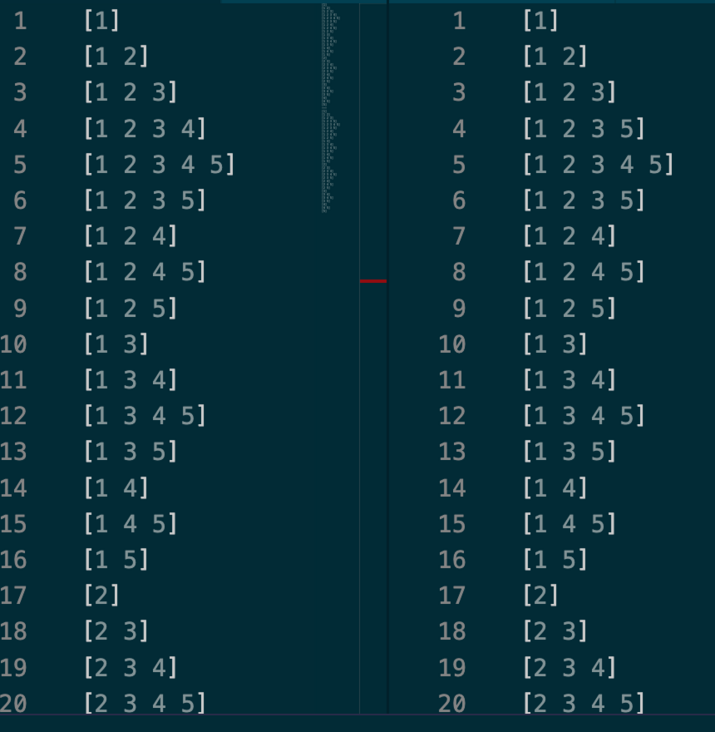
可以看到在第 4 行,两次输出结果不一致。我调试的时候发现,在插入
正确答案函数上,如文档介绍的:问题出在
append
The append built-in function appends elements to the end of a slice. If it has sufficient capacity, the destination is resliced to accommodate the new elements. If it does not, a new underlying array will be allocated. Append returns the updated slice...
只有当切片的底层数组有的容量不足时,才会分配新的底层数组。也就是说,使用
package main

import "fmt"

func main() {
    a := []int{1,2,3,4,5}

    fmt.Println(cap(a))

    b := append(a, 6)
    c := append(b[:2], 100)

    fmt.Println(a)
    fmt.Println(b)
    fmt.Println(c)

}
输出:
5
[1 2 3 4 5]
[1 2 100 4 5 6]
[1 2 100]
切片
next := make([]int, len(pre))
copy(next, pre)
next = append(next, (*nums)[i])
以上就是本文的全部内容了,是否有顺利帮助你解决问题?若是能给你带来学习上的帮助,请大家多多支持golang学习网!更多关于Golang的相关知识,也可关注golang学习网公众号。
本文内容来源于互联网,如有侵权请联系删除。
近期热门
11.18
11.15
站内热门



最新文章
11.20
11.20
11.20
11.20
热门专题