
为 HTTP Handler 构造无网络依赖的请求与响应断言
来源:17golang原创
时间:2026-10-07 10:03:26 304浏览 收藏
测试 HTTP Handler 不需要先启动一个监听端口。把它当成接收 *http.Request、写入 http.ResponseWriter 的函数,用 httptest.NewRequest 构造请求,再用 httptest.NewRecorder 接住响应,就能在没有网络依赖的情况下稳定断言状态码、Header 和 Body。
官方资料:https://pkg.go.dev/net/http/httptest
- 单元测试优先直接调用 Handler,不必创建真实服务器。
- 响应完成后用
recorder.Result()读取快照,Header 与 Body 的语义更接近真实响应。 - 成功、参数错误和空结果应放进同一组表格驱动用例,边界才不会被遗漏。
把 Handler 测试边界收窄为一次函数调用
如果目标只是验证路由函数对输入的处理,直接调用 Handler 比启动 httptest.NewServer 更合适。前者不经过端口、DNS、客户端重试和序列化链路,失败时能更快定位到请求解析或响应构造本身。真正需要验证中间件链、TLS、重定向或客户端行为时,再升级到测试服务器。
下面的示例让 Handler 只关心一个查询参数,并把错误分支也设计成明确的 HTTP 响应:
package handler_test

import (
    "fmt"
    "net/http"
)

// greetHandler 只演示 Handler 的输入与输出边界,不访问外部网络。
func greetHandler(w http.ResponseWriter, r *http.Request) {
    name := r.URL.Query().Get("name")
    if name == "" {
        http.Error(w, "missing name", http.StatusBadRequest)
        return
    }
    // 显式设置类型,测试时可以断言 Header 是否在首次写入前完成。
    w.Header().Set("Content-Type", "text/plain; charset=utf-8")
    fmt.Fprintf(w, "hello, %s", name)
}
用 httptest.NewRequest 固定请求输入
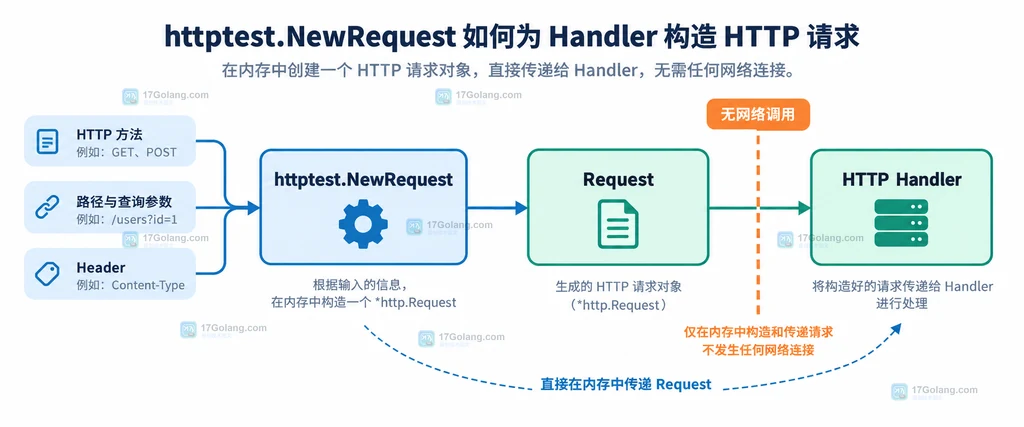
httptest.NewRequest 生成的是适合传给服务端 Handler 的请求。测试中可以直接把查询参数写入 target,也可以补充 Header 和 Body;这样每个用例都能从代码看出自己的输入,不依赖运行环境。
func TestGreetHandler(t *testing.T) {
    // 查询参数放在 URL 中,输入与真实 HTTP 请求保持同一表达方式。
    req := httptest.NewRequest(http.MethodGet, "/greet?name=Go", nil)
    req.Header.Set("Accept", "text/plain")

    recorder := httptest.NewRecorder()
    greetHandler(recorder, req)
}
无请求体时传入 nil 即可;需要测试 JSON 或表单时,用 strings.NewReader 提供 body,并同步设置 Content-Type。如果 Handler 读取上下文取消、租户标识等信息,可使用 httptest.NewRequestWithContext 把上下文作为输入的一部分。
用 ResponseRecorder 断言状态、Header 与 Body
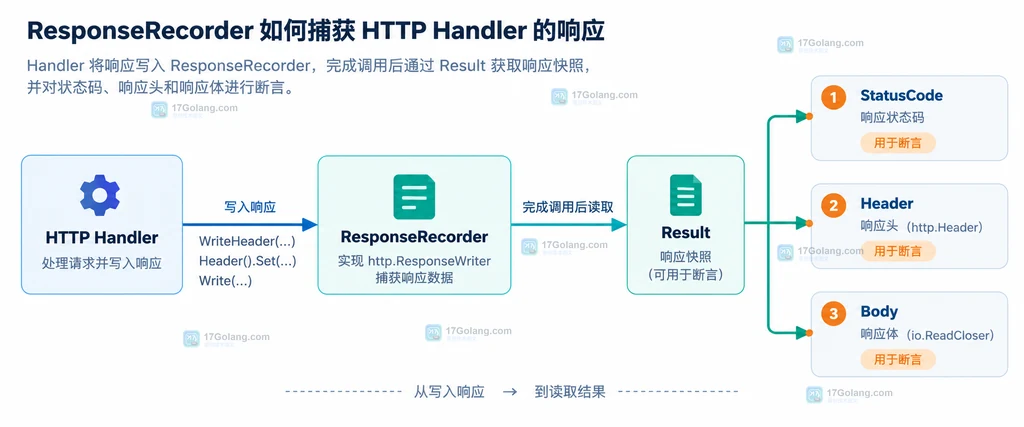
ResponseRecorder 实现了 http.ResponseWriter,可以接住 Handler 写入的内容。调用完成后建议使用 Result() 得到 *http.Response 再断言;官方文档特别提醒,直接读取 Code 在 Handler 从未写入时可能得到 0,而 Result() 更适合获取隐含的 200 状态。
import (
    "io"
    "net/http/httptest"
    "testing"
)

func TestGreetHandlerResponse(t *testing.T) {
    req := httptest.NewRequest("GET", "/greet?name=Go", nil)
    recorder := httptest.NewRecorder()

    // 直接调用一次 Handler,整个测试不需要真实端口或外部服务。
    greetHandler(recorder, req)
    resp := recorder.Result()
    defer resp.Body.Close() // 读取完响应体后释放资源。

    if resp.StatusCode != http.StatusOK {
        t.Fatalf("status = %d, want %d", resp.StatusCode, http.StatusOK)
    }
    if got := resp.Header.Get("Content-Type"); got != "text/plain; charset=utf-8" {
        t.Fatalf("content type = %q", got)
    }
    body, err := io.ReadAll(resp.Body)
    if err != nil {
        t.Fatalf("read response body: %v", err)
    }
    if string(body) != "hello, Go" {
        t.Fatalf("body = %q", body)
    }
}
这里的断言顺序是状态、Header、Body:状态先确认请求走到了预期分支,Header 验证响应类型,Body 最后验证业务结果。不要对整个 http.Response 做深度相等比较,因为响应对象未来可能包含更多字段;逐项断言反而更能表达测试意图。
用表格驱动覆盖成功、错误和边界输入
单个成功用例只能说明“正常输入能工作”。把缺少参数、普通参数和包含空格的参数放入表格,测试代码就能用同一套流程覆盖多个边界:
func TestGreetHandlerCases(t *testing.T) {
    tests := []struct {
        name       string
        target     string
        wantStatus int
        wantBody   string
    }{
        {name: "missing query", target: "/greet", wantStatus: http.StatusBadRequest, wantBody: "missing name\n"},
        {name: "normal query", target: "/greet?name=Go", wantStatus: http.StatusOK, wantBody: "hello, Go"},
    }

    for _, tt := range tests {
        t.Run(tt.name, func(t *testing.T) {
            // 每个子测试都创建独立请求和 recorder,避免状态互相污染。
            req := httptest.NewRequest(http.MethodGet, tt.target, nil)
            recorder := httptest.NewRecorder()
            greetHandler(recorder, req)

            resp := recorder.Result()
            defer resp.Body.Close()
            body, err := io.ReadAll(resp.Body)
            if err != nil {
                t.Fatalf("read response body: %v", err)
            }
            if resp.StatusCode != tt.wantStatus || string(body) != tt.wantBody {
                t.Fatalf("got status=%d body=%q, want status=%d body=%q", resp.StatusCode, body, tt.wantStatus, tt.wantBody)
            }
        })
    }
}
| 检查项 | 推荐断言 | 常见边界 |
|---|---|---|
| 状态 | resp.StatusCode | 200、400、404、405 |
| Header | resp.Header.Get | 类型、缓存、位置 |
| Body | io.ReadAll 后解析 | 空体、错误 JSON、换行 |
常见问题与维护边界
什么时候应该改用 httptest.NewServer?
当测试重点变成真实客户端如何访问 Handler、重定向、Cookie、TLS 或中间件组合时,使用 httptest.NewServer 更接近端到端链路。只验证单个 Handler 的输入输出时,Recorder 更轻量。
为什么不直接读取 ResponseRecorder.Code?
Handler 没有调用 WriteHeader 或 Write 时,Recorder 的内部状态可能仍是 0;调用 Result() 后读取 StatusCode,才能得到符合 HTTP 语义的响应快照。
测试响应体后需要关闭 Body 吗?
需要。测试中也应在得到响应后 defer resp.Body.Close(),让代码习惯与生产客户端保持一致;然后运行 go test ./... 检查全部包。
-
134 收藏
-
302 收藏
-
204 收藏
-
193 收藏
-
299 收藏
-
Golang · Go教程 | 1小时前 | 标准库 · 配置管理 · 错误处理 · 并发编程 · Go教程 · Go 并发初始化 共享配置 sync.OnceValue sync.OnceValues482 收藏
-
187 收藏
-
263 收藏
-
Golang · Go教程 | 2小时前 | goroutine · Context · Go教程 · 批处理 · 批处理 Timer WithTimeout Go context WithCancelCause 父子取消链441 收藏
-
336 收藏
-
Golang · Go教程 | 3小时前 | channel · select · Context · 并发编程 · Go教程 · context取消 time.NewTimer goroutine退出 Go select channel超时250 收藏
-
Golang · Go教程 | 3小时前 | channel · Context · Go教程 · Channel关闭 context取消 发送方关闭 Go数据管道 Go pipeline 多阶段并发492 收藏
-

- 前端进阶之JavaScript设计模式
- 设计模式是开发人员在软件开发过程中面临一般问题时的解决方案,代表了最佳的实践。本课程的主打内容包括JS常见设计模式以及具体应用场景,打造一站式知识长龙服务,适合有JS基础的同学学习。
- 立即学习 543次学习
-

- GO语言核心编程课程
- 本课程采用真实案例,全面具体可落地,从理论到实践,一步一步将GO核心编程技术、编程思想、底层实现融会贯通,使学习者贴近时代脉搏,做IT互联网时代的弄潮儿。
- 立即学习 516次学习
-

- 简单聊聊mysql8与网络通信
- 如有问题加微信:Le-studyg;在课程中,我们将首先介绍MySQL8的新特性,包括性能优化、安全增强、新数据类型等,帮助学生快速熟悉MySQL8的最新功能。接着,我们将深入解析MySQL的网络通信机制,包括协议、连接管理、数据传输等,让
- 立即学习 500次学习
-
- JavaScript正则表达式基础与实战
- 在任何一门编程语言中,正则表达式,都是一项重要的知识,它提供了高效的字符串匹配与捕获机制,可以极大的简化程序设计。
- 立即学习 487次学习
-

- 从零制作响应式网站—Grid布局
- 本系列教程将展示从零制作一个假想的网络科技公司官网,分为导航,轮播,关于我们,成功案例,服务流程,团队介绍,数据部分,公司动态,底部信息等内容区块。网站整体采用CSSGrid布局,支持响应式,有流畅过渡和展现动画。
- 立即学习 485次学习