
Go http.Server.BaseContext 返回 nil 会有什么后果
来源:17golang原创
时间:2026-11-07 19:18:52 322浏览 收藏
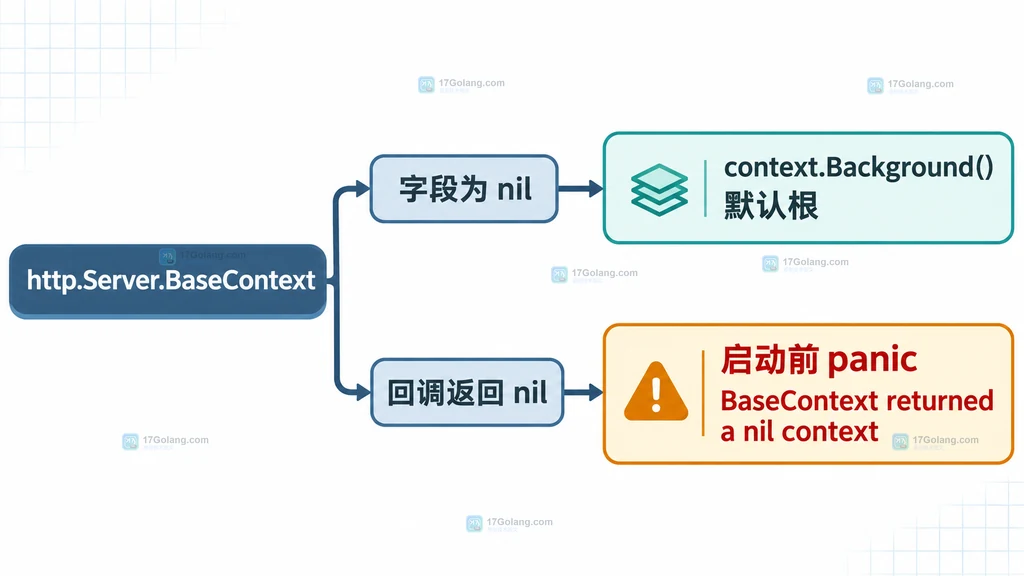
如果 http.Server.BaseContext 这个回调返回了 nil,服务不会把它当成“没有设置上下文”继续运行,而是在开始接收请求前触发 panic。Go 标准库源码中的直接提示是 BaseContext returned a nil context。
这里最容易混淆的是两个 nil:Server.BaseContext 字段本身为 nil 时,标准库会使用 context.Background();字段不为 nil、但回调结果为 nil 时,则违反了回调契约。修复原则很简单:回调始终返回非空 Context,把取消、追踪值或服务级元数据挂到这个根 Context 上。
先区分两个 nil:字段为空和回调返回为空
BaseContext 的类型是接收监听器并返回 Context 的函数。下面两种写法的运行结果完全不同:
// 情况一:没有提供回调,Server 使用 context.Background() 作为根 Context。
server := &http.Server{
    Handler: handler,
}

// 情况二:提供了回调,但返回 nil,启动时会触发 panic。
server := &http.Server{
    Handler: handler,
    BaseContext: func(listener net.Listener) context.Context {
        // 这里不能用 nil 表示“交给默认值处理”。
        return nil
    },
}
因此,看到“BaseContext 没有配置”和“BaseContext 返回 nil”时不要按同一条路径排查。前者是默认行为,后者是应用代码主动提供了一个无效结果。
按启动时间线定位 panic
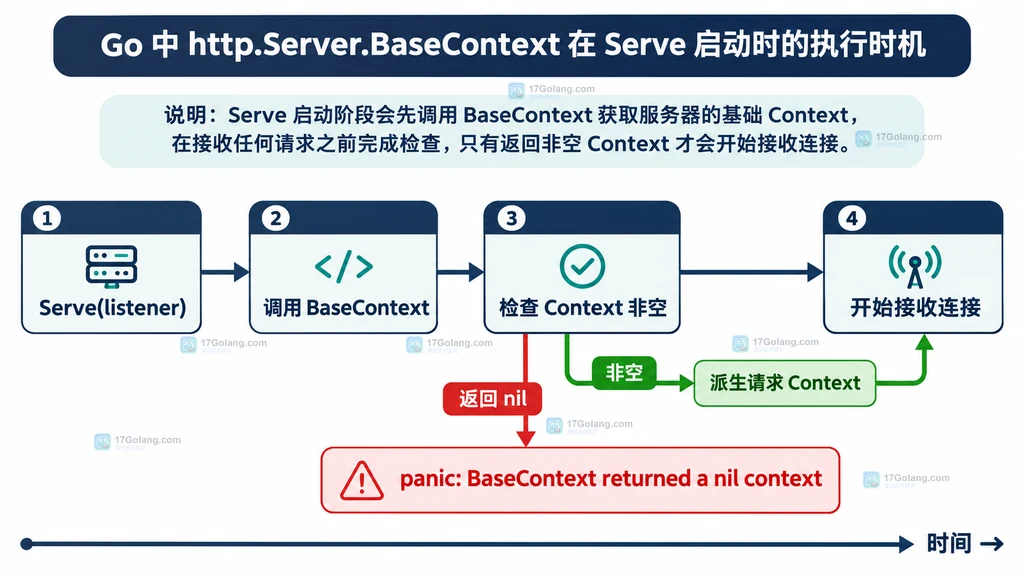
这个问题通常不是某个业务请求触发的。服务器进入 Serve 后,会先确定监听器对应的基础 Context,再进入接收连接和分发请求的流程。BaseContext 回调返回 nil 时,故障点位于“接收第一个连接之前”。
- 进入 Serve:服务器拿到监听器,准备启动接收循环。
- 计算基础 Context:如果回调不为空,就调用它并传入当前监听器。
- 检查结果:结果为 nil 时立即 panic,服务不会进入稳定的请求处理阶段。
- 继续接收连接:只有拿到非空 Context,后续请求 Context 才能从这条根链派生。
这也解释了为什么访问日志里可能没有任何请求记录,但进程已经退出。排查时先看进程启动日志、服务管理器的退出原因和 Serve 调用栈,不要先从 Handler 内部的业务超时入手。
用非空 Context 修复回调
最小修复是让回调返回 context.Background() 或由它派生出的非空 Context。实际项目通常会把服务关闭信号、追踪对象或只读配置放在外层 Context 中,再让每个请求继续派生。
// serviceRoot 是整个 HTTP 服务共享的根 Context,生命周期由服务启动代码管理。
serviceRoot, cancel := context.WithCancel(context.Background())
defer cancel() // 服务退出时取消根 Context,通知下游收尾。

server := &http.Server{
    Handler: handler,
    BaseContext: func(listener net.Listener) context.Context {
        // listener 可用于区分多监听器服务,但无论如何都要返回非 nil Context。
        _ = listener
        return serviceRoot
    },
}

if err := server.Serve(listener); err != nil && !errors.Is(err, http.ErrServerClosed) {
    // 只把真正的 Serve 错误交给上层,正常关闭不当成故障。
    return fmt.Errorf("serve http: %w", err)
}
如果服务有多个监听器,可以根据传入的 net.Listener 选择不同的根 Context,但每条分支都必须返回非空值。不要用“出错就返回 nil”的方式表达配置缺失;应该在创建服务器之前直接返回配置错误,让错误出现在更接近根因的位置。
用回归测试固定回调契约
测试重点不是验证 panic 文案,而是固定两个契约:有效配置返回非空 Context;错误配置在进入服务运行阶段前就被拒绝。生产代码可以把 BaseContext 回调封装成构造函数,并在构造阶段检查依赖。
// newServer 只接受非空根 Context,避免把错误推迟到 Serve 阶段。
func newServer(root context.Context, handler http.Handler) (*http.Server, error) {
    if root == nil {
        return nil, errors.New("root context must not be nil")
    }
    return &http.Server{
        Handler: handler,
        BaseContext: func(listener net.Listener) context.Context {
            // 回调只读取已经检查过的 root,不在请求启动时临时拼接 nil。
            _ = listener
            return root
        },
    }, nil
}

func TestNewServerRejectsNilRoot(t *testing.T) {
    // nil 应在构造阶段失败,而不是等 Serve 启动后才 panic。
    if _, err := newServer(nil, http.HandlerFunc(func(w http.ResponseWriter, r *http.Request) {})); err == nil {
        t.Fatal("expected nil root context to be rejected")
    }
}
如果必须测试底层行为,可以单独写一个故意返回 nil 的回调,用测试进程捕获 panic;但这类测试应标注为契约测试,避免把“会 panic”误当成可接受的生产配置。
常见误区与快速结论
| 现象 | 真正含义 | 处理方式 |
|---|---|---|
| BaseContext 字段为 nil | 标准库使用 Background | 不需要为默认行为补一个 nil 回调 |
| 回调返回 nil | 违反非空 Context 契约 | 返回非空根 Context,或提前返回配置错误 |
| 没有访问日志但进程退出 | 故障发生在接收连接之前 | 查看启动日志和 Serve 调用栈 |
一句话总结:BaseContext == nil 是默认分支,BaseContext(listener) == nil 是配置错误。把根 Context 的创建和非空检查前移,再用构造函数测试固定约束,就能避免服务启动后才以 panic 形式暴露问题。
相关问题
- BaseContext 和 Handler 中的请求 Context 有什么关系? BaseContext 提供服务级根,具体请求 Context 会从它继续派生。
- 能不能在 BaseContext 中返回 Background? 可以,关键是返回非空 Context;是否携带服务级取消信号取决于生命周期设计。
- 服务关闭时应该取消哪个 Context? 通常取消服务根 Context,并配合
Server.Shutdown等待请求收尾。
-
502 收藏
-
502 收藏
-
501 收藏
-
501 收藏
-
501 收藏
-
285 收藏
-
159 收藏
-
378 收藏
-
457 收藏
-
471 收藏
-
110 收藏
-
347 收藏
-
278 收藏
-
138 收藏
-
307 收藏
-
152 收藏
-
466 收藏
-
- 前端进阶之JavaScript设计模式
- 设计模式是开发人员在软件开发过程中面临一般问题时的解决方案,代表了最佳的实践。本课程的主打内容包括JS常见设计模式以及具体应用场景,打造一站式知识长龙服务,适合有JS基础的同学学习。
- 立即学习 543次学习
-

- GO语言核心编程课程
- 本课程采用真实案例,全面具体可落地,从理论到实践,一步一步将GO核心编程技术、编程思想、底层实现融会贯通,使学习者贴近时代脉搏,做IT互联网时代的弄潮儿。
- 立即学习 516次学习
-

- 简单聊聊mysql8与网络通信
- 如有问题加微信:Le-studyg;在课程中,我们将首先介绍MySQL8的新特性,包括性能优化、安全增强、新数据类型等,帮助学生快速熟悉MySQL8的最新功能。接着,我们将深入解析MySQL的网络通信机制,包括协议、连接管理、数据传输等,让
- 立即学习 500次学习
-
- JavaScript正则表达式基础与实战
- 在任何一门编程语言中,正则表达式,都是一项重要的知识,它提供了高效的字符串匹配与捕获机制,可以极大的简化程序设计。
- 立即学习 487次学习
-

- 从零制作响应式网站—Grid布局
- 本系列教程将展示从零制作一个假想的网络科技公司官网,分为导航,轮播,关于我们,成功案例,服务流程,团队介绍,数据部分,公司动态,底部信息等内容区块。网站整体采用CSSGrid布局,支持响应式,有流畅过渡和展现动画。
- 立即学习 485次学习