Go pprof.Label 能从当前请求的 context 找到标签吗
时间:2026-11-28
浏览:351
作者:佚名
Go 的 pprof.Label 可以从请求的 context 读出性能标签。先用 pprof.WithLabels 添加标签,再把它返回的新 context 交给查询函数即可。普通的 context.WithValue 使用另一种存储方式。
Go 标准库文档 https://pkg.go.dev/runtime/pprof
同一个查询键,两种写入方式
把 route=/orders 写进 pprof.WithLabels 返回的 context,pprof.Label 查询 route 时会得到 ok=true。若在原始请求的 context 上只用 context.WithValue 保存同名业务值,查询 route 时会得到 ok=false。以下对比假设原始请求还没有 route 性能标签。
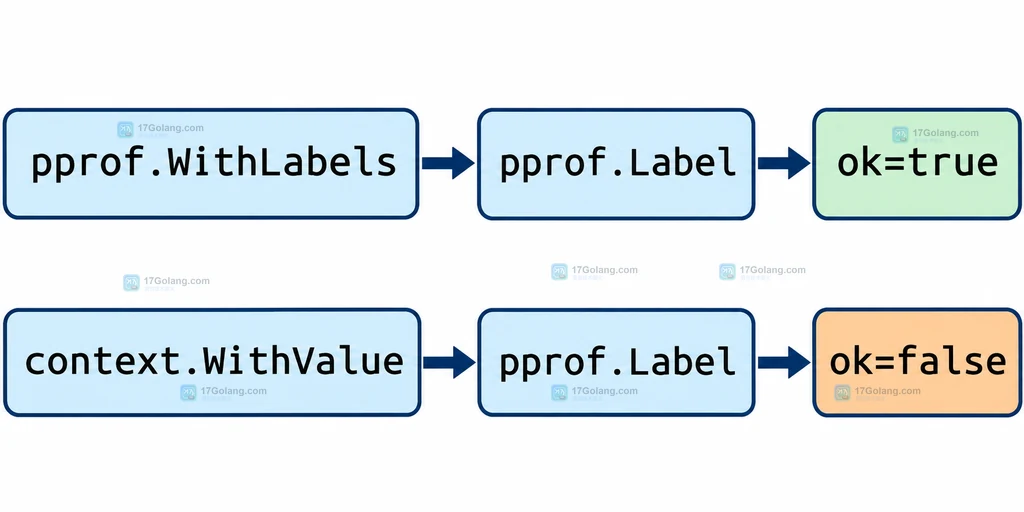
下面的例子从 HTTP 请求取得 context,再分别构造两种写入方式。使用自定义类型做业务值的键,让业务键在本包中有明确归属。性能标签的键依旧是字符串。
package sample

import (
    "context"
    "fmt"
    "net/http"
    "runtime/pprof"
)

type routeKey struct{}

func inspectRequest(r *http.Request) {
    base := r.Context()

    // 业务值和性能标签分别存入两个派生 context。
    business := context.WithValue(base, routeKey{}, "/orders")
    labeled := pprof.WithLabels(base, pprof.Labels("route", "/orders"))

    // 第二个返回值用来判断性能标签是否存在。
    label, ok := pprof.Label(labeled, "route")
    fmt.Println(label, ok)
    _, ok = pprof.Label(business, "route")
    fmt.Println(ok)
}
预期第一行是 /orders true,第二行是 false。若把第一处查询的参数改回原始请求的 context,也会读不到新增的 route。已有同名标签时,WithLabels 会用新值覆盖该键,其余标签继续保留。
给执行中的工作设置采样标签
只查询 context 可以用 WithLabels。需要让当前 goroutine 的一段工作带上性能标签时,使用 pprof.Do,把业务逻辑放进回调,传递回调收到的 context。回调期间创建的 goroutine 会继承这组运行时标签。已经存在的工作协程应在执行任务的地方设置标签。
pprof.Label 本身是查询接口。常见做法是用它核对 context 里有没有指定标签,再用 Do 标记要采样的工作。Go 文档列出的使用场景包括 CPU 和 goroutine profile。
排查查询结果为空时看三处
- 添加标签时是否调用 WithLabels 或 Do。
- 下游是否收到添加标签后的 context。只把原请求传下去,查询不会看到新值。
- 标签名是否完全一致。值可以是空字符串,是否存在由返回的布尔值决定。
常见问题
为什么同一个请求里的两个函数查到不同的值?
先比对两处使用的 context。一个函数可能收到旧的 context,也可能在下游收到覆盖过同名标签的新 context。
Do 返回后还能通过之前的 context 读取标签吗?
如果保存了回调收到的派生 context,仍可从该对象读取标签。Do 返回时恢复的是调用 goroutine 的运行时标签。
本文内容来源于互联网,如有侵权请联系删除。
近期热门
站内热门



最新文章
热门专题